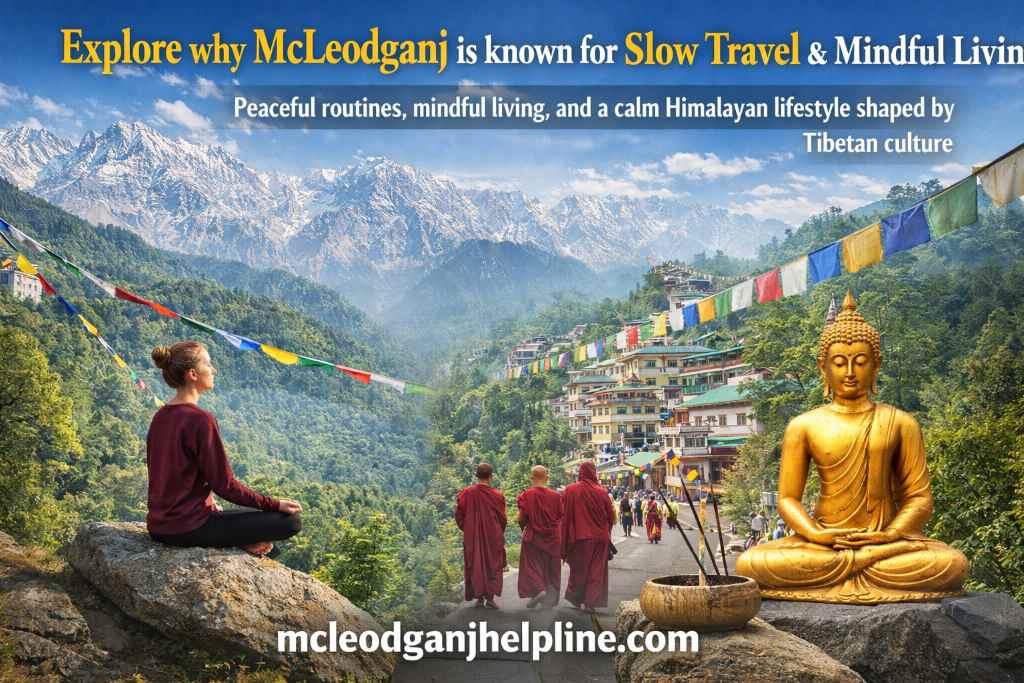
AI Overview:- Lifestyle Overview
McLeodganj offers a calm, slow-paced lifestyle shaped by Tibetan culture, monasteries, mountain surroundings, and long-stay travelers. Life here focuses on mindfulness, simple routines, walking culture, and meaningful daily experiences rather than speed or luxury.
📑 Table of Contents
- 🕰️ Understanding Slow Life in McLeodganj
What slow travel means in daily life.
- ☀️ Daily Lifestyle Patterns
How people live day to day.
- 🕉️ Social & Cultural Influence
How culture shapes calm living.
- 🧘 Impact on Visitors
How visitors adapt to slow life.
- 📈 Modern Slow Travel Trends
Future of calm living.
- ❓ FAQ
- 📝 Editorial Reviews
- ⭐ User Reviews
🐢 The Natural Pace of Life
Why daily life moves slowly here.
Daily Rhythm
Life in McLeodganj moves slowly by choice, not by lack of activity. Shops open late, people walk instead of rushing, and conversations are unhurried. The mountain environment and spiritual influence naturally reduce stress and urgency.
What Slows Life Down
- Mountain terrain
- Walking-based movement
- Spiritual atmosphere
- Long-stay visitors
City vs McLeodganj Pace
| Aspect | Metro City | McLeodganj |
|---|---|---|
| Daily Speed | Fast | Slow |
| Commute | Vehicles | Walking |
| Routine | Fixed | Flexible |
Slow pace is considered a strength, not a limitation.
People Also Ask
Is McLeodganj very slow?
Yes, especially compared to cities.
⏳ How Time Is Experienced
A different relationship with time.
Time Awareness
In McLeodganj, time feels less structured. People plan days loosely, allowing space for weather, mood, and chance encounters. This helps visitors disconnect from deadlines and reconnect with themselves.
Common Observations
- Flexible schedules
- Minimal rush
- Long conversations
Visitors often need a few days to adapt.
People Also Ask
Do things take longer here?
Yes, patience is part of daily life.
🌄 Morning Life
Quiet and mindful mornings.
Early Hours
Mornings in McLeodganj are peaceful. Prayer chants, birds, and soft light define the start of the day. Many people begin with walks, meditation, or quiet tea.
Morning Activities
- Walking
- Meditation
- Tea at cafes
Early mornings are ideal for calm exploration.
People Also Ask
Are mornings busy?
No, they are mostly quiet.
🌙 Evening Routine
Relaxed evenings and early nights.
Evening Feel
Evenings are social but calm. People gather at cafes, attend talks, or simply rest. Loud nightlife is limited, encouraging restful nights.
Evening Choices
- Cafe conversations
- Light walks
- Reading
McLeodganj favors rest over nightlife.
People Also Ask
Is nightlife active?
No, it is very limited.
🙏 Tibetan Cultural Influence
Mindfulness in daily behavior.
Cultural Calm
Tibetan values of patience, compassion, and simplicity strongly influence the town’s lifestyle.
Key Values
- Mindfulness
- Compassion
- Simplicity
Culture shapes daily behavior.
People Also Ask
Does culture affect lifestyle?
Yes, deeply.
🤝 Community Living
Shared calm spaces.
Community Feel
People interact respectfully, often forming temporary but meaningful communities.
Community Traits
- Friendly
- Supportive
- Low conflict
Community life feels gentle.
People Also Ask
Is McLeodganj social?
Yes, but quietly.
🧠 Mental Wellbeing
Mental calm and clarity.
Mental Shift
Visitors often feel reduced stress and better mental clarity after a few days.
Common Effects
- Reduced anxiety
- Better sleep
Slow living supports mental health.
People Also Ask
Is McLeodganj relaxing?
Yes, very.
🏡 Long-Stay Lifestyle
Why people stay longer.
Extended Living
Many visitors extend stays after adjusting to the calm rhythm.
Reasons
- Peace
- Affordability
- Routine
Long stays are increasing.
People Also Ask
Do people stay months?
Yes, many do.
💻 Digital Nomads & Slow Work
Work-life balance.
Work Balance
Remote workers value the calm environment for focused work.
Why It Works
- Low distraction
- Nature breaks
Slow work is growing.
People Also Ask
Is McLeodganj good for remote work?
Yes, with planning.
♻️ Sustainable Slow Travel
Low-impact living.
Sustainability
Slow travel supports environmental and cultural sustainability.
Benefits
- Less waste
- Local support
Slow travel reduces impact.
People Also Ask
Is slow travel sustainable?
Yes, more than fast tourism.
FAQs
Why is McLeodganj considered slow?
Because daily life prioritizes calm routines, walking culture, and mindfulness over speed and deadlines.
Is McLeodganj good for stress relief?
Yes, many visitors feel mentally relaxed within days.
Do shops open late?
Yes, many shops start slowly in the morning.
Is nightlife active?
No, nightlife is minimal and calm.
Is slow travel suitable for families?
Yes, families enjoy the relaxed environment.
Do people walk a lot?
Yes, walking is the main mode of movement.
Is McLeodganj noisy?
Generally no, except during peak season.
Does culture influence lifestyle?
Strongly, especially Tibetan culture.
Is slow travel boring?
No, it is meaningful and engaging.
Do people meditate daily?
Many locals and visitors do.
Is McLeodganj good for long stays?
Yes, very popular for long stays.
Is internet available?
Yes, but occasional outages happen.
Are cafes relaxed?
Yes, cafes encourage long sitting.
Is slow living intentional?
Yes, it is part of local values.
Does weather affect pace?
Yes, weather slows routines further.
Can fast travelers enjoy it?
Yes, but adjustment helps.
Is McLeodganj good for digital detox?
Yes, many visitors disconnect.
Is calm lifestyle seasonal?
Mostly year-round.
Do people return for lifestyle?
Yes, many repeat visitors do.
Is slow travel increasing?
Yes, especially after 2020.
🔧 Other About McLeodganj Town & Culture
No other guide found