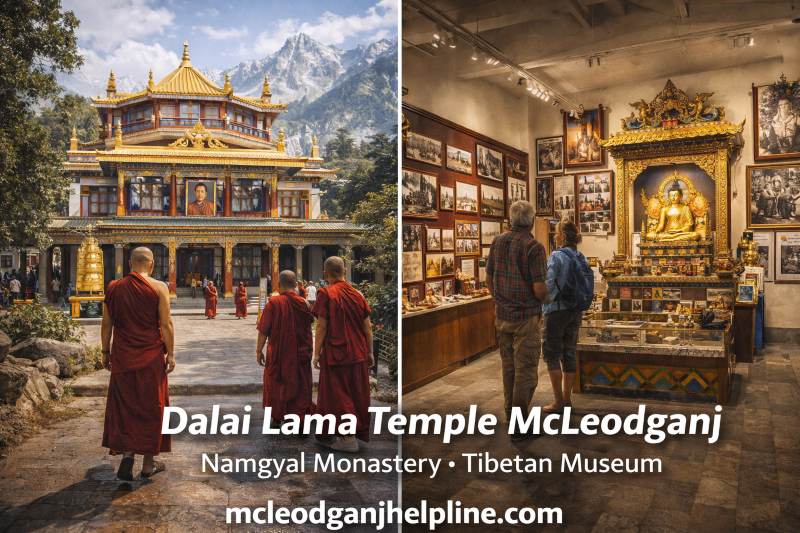
AI Overview:- Cultural Overview
McLeodganj serves as the spiritual headquarters of the Tibetan government-in-exile and hosts some of the most significant Tibetan monasteries and museums outside Tibet, making it a key destination for cultural and spiritual exploration.
📑 Table of Contents
- 🚀 Executive Overview & Quick Start
High-level summary of monasteries and museums for first-time visitors.
- 🕉️ Major Monasteries & Temples
Spiritual centers and monastic institutions.
- 🏛️ Museums & Cultural Institutions
Learning centers preserving Tibetan history.
- 🧭 Visitor Experience & Planning
How to visit respectfully and efficiently.
- ✅ Myths, Value & Final Verdict
Clarifying misconceptions and concluding insights.
- ❓ FAQ
- 📝 Editorial Reviews
- ⭐ User Reviews
📌 Executive Summary & 2026 Overview
Why McLeodganj’s monasteries and museums matter.
Cultural Snapshot
McLeodganj is internationally recognized as the residence of His Holiness the 14th Dalai Lama.
Its monasteries and museums preserve Tibetan religion, art, history, and the lived experience of exile.
Why Visit
- Authentic Tibetan Buddhist learning
- Living monastic traditions
- Deep historical context
Many institutions here are active centers of learning, not just tourist sites.
⚡ Quick-Start: Must-Visit Sites
Top monasteries and museums for short visits.
Top Picks
- Dalai Lama Temple (Tsuglagkhang)
- Namgyal Monastery
- Tibetan Museum
- Library of Tibetan Works & Archives
All major sites are within walking distance of each other.
🙏 Dalai Lama Temple (Tsuglagkhang Complex)
The spiritual heart of McLeodganj.
Spiritual Significance
The Tsuglagkhang Complex includes the Dalai Lama’s residence, main temple, and Namgyal Monastery.
It is a focal point for prayer, meditation, and major Buddhist teachings.
Visitor Experience
- Morning prayers
- Prayer wheel circuit (kora)
- Meditation halls
Photography is restricted inside prayer halls.
🏯 Namgyal Monastery
The personal monastery of the Dalai Lama.
Monastic Role
Namgyal Monastery is the largest Tibetan monastery outside Tibet.
It focuses on advanced Buddhist studies, rituals, and philosophical debate.
Highlights
- Monk debates
- Ritual ceremonies
- Traditional art
Late mornings to observe debates.
🖼️ Tibetan Museum
Documenting Tibetan history and exile.
Museum Focus
The Tibetan Museum presents the history of Tibet through photographs, videos, and personal accounts.
It provides important political and historical context to Tibetan exile.
What You’ll Learn
- Tibetan history
- Human rights issues
- Exile narratives
Some exhibits are deeply moving.
📚 Library of Tibetan Works & Archives
A global center for Tibetan studies.
Institutional Importance
This library preserves ancient Tibetan manuscripts and modern research materials.
It attracts scholars, monks, and researchers from around the world.
Collections
- Rare manuscripts
- Buddhist texts
- Cultural artifacts
Ideal for culture and history enthusiasts.
🙏 Visitor Etiquette & Dress Code
Respectful conduct at religious sites.
Etiquette Rules
- Dress modestly
- Maintain silence
- Remove shoes where required
These are active religious institutions.
⏰ Best Time to Visit Monasteries & Museums
Timing your cultural visits.
Timing Advice
Morning hours offer quieter, more authentic experiences.
Festival days provide vibrant cultural exposure.
Best Seasons
- March–June
- September–November
Losar and Dalai Lama teachings attract crowds.
❌ Common Myths About Monasteries
Debunking misunderstandings.
Myths
- Monasteries are only for monks
- Museums are boring
- Visitors are not welcome
Most sites encourage respectful visitors.
🏁 Editorial Verdict & Conclusion
Final cultural assessment.
Final Verdict
Monasteries and museums are the soul of McLeodganj.
They offer rare access to living Tibetan culture, history, and spirituality.
Why It Matters
- Cultural depth
- Spiritual learning
- Historical understanding
Essential experience for every McLeodganj visitor.
FAQs
Which is the most important monastery in McLeodganj?
The Dalai Lama Temple and Namgyal Monastery are the most important spiritual sites in McLeodganj.
Are monasteries open to tourists?
Yes, most monasteries welcome respectful visitors.
Is there an entry fee for monasteries?
Most monasteries are free to enter; museums may charge a small fee.
What does the Tibetan Museum focus on?
It documents Tibetan history, culture, and exile experiences.
Can children visit monasteries?
Yes, children are welcome with supervision.
Is photography allowed?
Photography rules vary; always check signs.
How much time should I allocate?
Half to one full day is sufficient for major sites.
Is silence required?
Yes, especially inside prayer halls.
Are guides available?
Local guides are available for cultural tours.
What is the best time to visit?
Morning hours are best for peaceful visits.
🔧 Other Things to Do
No other guide found