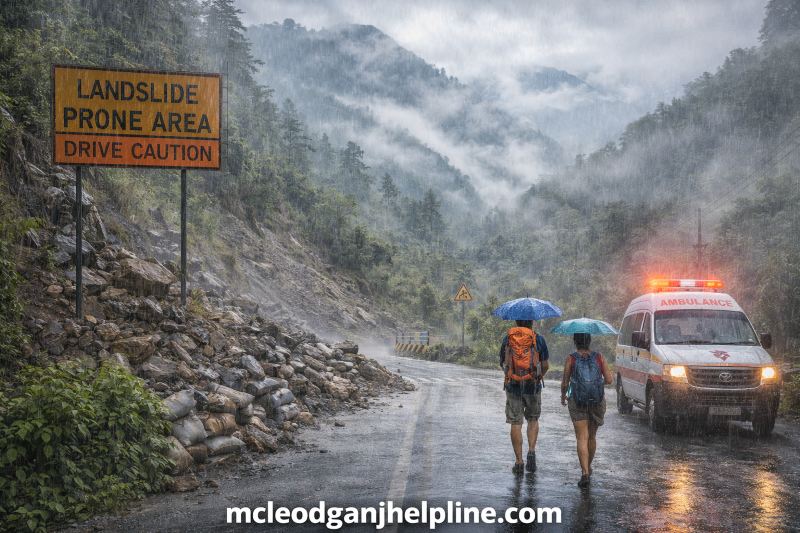
AI Overview:- Monsoon Risk Overview
While monsoon enhances greenery in McLeodganj, it also introduces significant travel risks including landslides, road blockages, poor visibility, and health concerns. Travelers should evaluate safety carefully before planning a visit.
📑 Table of Contents
- 🌦️ Monsoon Season Overview
Understanding the monsoon season timeline and weather behavior in McLeodganj.
- ⚠️ Major Travel Risks During Monsoon
Core safety challenges faced by travelers.
- 🚫 Impact on Travel & Activities
How monsoon affects sightseeing and mobility.
- 🛡️ Safety Precautions & Risk Mitigation
How to reduce monsoon travel risks.
- 📝 Final Verdict & Travel Advice
Is monsoon travel worth the risk?
- ❓ FAQ
- 📝 Editorial Reviews
- ⭐ User Reviews
📌 Executive Summary & 2026 Overview
High-level summary of monsoon travel risks.
Monsoon at a Glance
The monsoon season in McLeodganj typically spans from July to September, characterized by persistent rainfall, thick cloud cover, and high humidity.
While the surrounding Dhauladhar landscape turns lush green and visually appealing, travel risks increase significantly due to unstable terrain, road disruptions, and limited visibility.
From a safety and accessibility perspective, monsoon is considered the least favorable season for leisure travel in McLeodganj.
Key Risk Indicators
- Prolonged heavy rainfall
- Frequent landslides
- Road blockages and delays
- Reduced visibility
- Limited outdoor activity options
Monsoon travel is not recommended for first-time visitors, families, or travelers with fixed itineraries.
People Also Ask
When does monsoon start in McLeodganj?
Monsoon usually begins in early July and lasts until September.
Is McLeodganj open during monsoon?
Yes, but travel disruptions and safety concerns are common during this season.
🌧️ Monsoon Climate Explained
Rainfall patterns and humidity levels.
Rainfall Behavior
During monsoon, McLeodganj experiences frequent rain spells that can last for hours or even days, often accompanied by dense fog.
Humidity levels rise sharply, reducing comfort and increasing the likelihood of damp conditions indoors and outdoors.
The combination of rainfall and mountainous terrain intensifies weather impact compared to plains.
Climate Characteristics
- Continuous or intermittent rainfall
- High humidity levels
- Persistent fog and cloud cover
- Cool but damp temperatures
- Limited sunshine
Weather conditions can change rapidly within hours during monsoon.
People Also Ask
Does it rain every day in McLeodganj during monsoon?
Rainfall is frequent, though intensity and duration vary day to day.
Is humidity high in McLeodganj during monsoon?
Yes, humidity levels are significantly higher compared to other seasons.
🪨 Landslides & Road Blockages
The most serious monsoon risk.
Landslide Risk
Heavy rainfall saturates the soil in the Dhauladhar region, significantly increasing the risk of landslides on steep slopes.
Access roads connecting Dharamshala to McLeodganj are particularly vulnerable, leading to sudden closures and long delays.
Impact on Travel
- Unexpected road closures
- Stranded vehicles and travelers
- Delayed emergency response
- Extended travel times
Avoid road travel during or immediately after heavy rainfall.
People Also Ask
Are landslides common near McLeodganj?
Yes, landslides are common during monsoon due to steep terrain and heavy rainfall.
🌫️ Poor Visibility & Fog
Reduced driving and trekking safety.
Visibility Challenges
Thick fog and low-lying clouds are common during monsoon, drastically reducing visibility on roads and trails.
This significantly increases the risk of accidents, especially during early mornings and evenings.
Affected Areas
- Mountain roads
- Trekking paths
- Scenic viewpoints
- Rural connectors
Avoid driving in foggy or low-visibility conditions.
People Also Ask
Is driving safe in McLeodganj during monsoon?
Driving is risky due to fog, slippery roads, and landslide-prone areas.
🩺 Health & Hygiene Risks
Illness concerns during monsoon.
Health Concerns
Excess moisture and damp environments during monsoon create favorable conditions for infections and illnesses.
Food spoilage, contaminated water, and increased insect activity pose additional health risks to travelers.
Common Issues
- Stomach and water-borne infections
- Respiratory illnesses
- Fungal and skin infections
- Insect bites
Carry personal medicines, drink bottled water, and avoid street food during heavy rains.
People Also Ask
Do people fall sick more often during monsoon in McLeodganj?
Yes, humidity and contamination increase the risk of infections.
🥾 Trekking & Outdoor Activity Risks
Why trekking is discouraged.
Outdoor Safety
Trekking and outdoor activities in McLeodganj become high-risk during the monsoon season due to persistent rainfall, unstable terrain, and reduced visibility.
Wet soil leads to trail erosion, loose rocks, and slippery paths, while sudden downpours can trap hikers far from safe shelter.
Emergency response times may also increase due to blocked routes, making even minor incidents potentially dangerous.
Key Hazards
- Severely slippery and eroded trails
- Sudden heavy downpours and flash rain
- Poor visibility due to fog and clouds
- Increased presence of leeches and insects
- Navigation difficulty and GPS inaccuracy
- Delayed rescue access in emergencies
Avoid solo hikes and unmarked trails entirely during monsoon months.
People Also Ask
Is trekking safe in McLeodganj during monsoon?
No, trekking is generally unsafe due to landslides, slippery terrain, and unpredictable weather.
Are guided treks safer during monsoon?
Even guided treks carry significant risk and are usually suspended during heavy rainfall periods.
📷 Sightseeing Limitations
Reduced visibility and access.
Tourism Impact
During the monsoon season, continuous cloud cover and fog significantly reduce visibility at popular viewpoints across McLeodganj.
Frequent rainfall leads to muddy walking paths, temporary closures of attractions, and limited access to outdoor sightseeing locations.
As a result, travelers may miss the panoramic mountain views and photography opportunities that define the region’s appeal.
Limitations
- Viewpoints blocked by clouds and fog
- Mud-covered trails and walkways
- Temporary closure of scenic spots
- Unpredictable sightseeing schedules
- Reduced photography opportunities
Monsoon visits focus more on indoor experiences than scenic exploration.
People Also Ask
Can you see mountain views in McLeodganj during monsoon?
Views are often obstructed by clouds, with only occasional clear windows.
Are tourist attractions open during monsoon?
Most remain open, but access may be limited due to weather-related conditions.
✅ Essential Monsoon Safety Precautions
Practical safety steps.
Why Precautions Matter
Monsoon conditions in McLeodganj can change rapidly due to heavy rainfall, fog, and unstable mountain roads, increasing the risk of landslides and travel delays.
Following basic safety precautions significantly reduces exposure to avoidable risks and ensures a more controlled travel experience.
Safety Checklist
- Monitor daily weather alerts and local advisories
- Avoid night travel on mountain roads
- Stay close to main town areas with better connectivity
- Use registered taxis and experienced local drivers
- Keep emergency contact numbers accessible offline
- Avoid trekking or remote trails during heavy rainfall
If rainfall continues for several hours, postpone travel plans until conditions stabilize.
People Also Ask
Is it safe to drive to McLeodganj during monsoon?
Driving can be risky due to landslides and low visibility; experienced drivers and daylight travel are strongly recommended.
Should trekking be avoided in monsoon?
Yes, trekking is generally unsafe during heavy rains due to slippery trails and sudden weather changes.
🎒 Monsoon Packing Essentials
Items to reduce risk.
Smart Packing for Monsoon
Packing appropriately for the monsoon season in McLeodganj is essential to stay dry, maintain mobility, and reduce exposure to cold and damp conditions.
Water-resistant and quick-drying items help travelers remain comfortable despite frequent rain and high moisture levels.
Must-Have Items
- Waterproof footwear with good grip
- High-quality rain jacket or poncho
- Quick-dry clothing and extra socks
- Backpack rain cover or waterproof bag
- Compact umbrella
- Basic first-aid kit and personal medication
Avoid heavy cotton clothing, as it dries slowly and increases discomfort in wet conditions.
People Also Ask
What shoes are best for monsoon travel in McLeodganj?
Waterproof shoes with strong grip are best to handle slippery roads and trails.
Do I need warm clothes during monsoon?
Yes, light warm layers are recommended as temperatures can drop during prolonged rainfall.
❌ Editorial Verdict
Final recommendation on monsoon travel.
Final Assessment
Monsoon travel to McLeodganj presents significant challenges due to heavy rainfall, frequent landslides, slippery roads, and unpredictable transportation delays.
While the landscape becomes lush and visually appealing, safety risks and access limitations outweigh the benefits for most travelers, especially first-time visitors and families.
Unless travel flexibility, risk awareness, and prior hill-driving or trekking experience are present, visiting during the monsoon season is generally not recommended.
Recommended For
- Budget travelers with flexible schedules
- Experienced hill travelers familiar with monsoon risks
- Slow travelers seeking solitude over sightseeing
- Photographers prepared for weather disruptions
Road closures, landslides, and sudden weather changes are common during monsoon. Always check local advisories before traveling.
People Also Ask
Is it safe to visit McLeodganj during monsoon?
It can be risky due to landslides and road disruptions, making it unsuitable for most travelers.
Are hotels cheaper during monsoon in McLeodganj?
Yes, accommodation prices are generally lower, but limited accessibility may affect travel plans.
FAQs
Is it safe to visit McLeodganj during monsoon?
Travel is possible but carries higher risks.
Which months are monsoon in McLeodganj?
July to September.
Are landslides common?
Yes, especially after heavy rain.
Is trekking allowed?
It is generally discouraged.
Are roads closed often?
Temporary closures are common.
Is monsoon good for sightseeing?
Visibility is often poor.
Is it cheaper to travel?
Yes, prices are usually lower.
Are medical facilities available?
Yes, but access may be delayed.
Is fog common?
Yes, especially in mornings and evenings.
Should families travel in monsoon?
Not recommended.
Is photography good?
Limited due to clouds.
Do buses operate normally?
Schedules may be affected.
Is food hygiene an issue?
Extra caution is advised.
Is solo travel safe?
Only with experience and caution.
Is internet affected?
Occasionally during heavy rain.
Do hotels remain open?
Most remain open with fewer guests.
Is wildlife risk higher?
Movement of wildlife may increase.
Is emergency help available?
Yes, but response time may increase.
Is August the worst month?
It often has the heaviest rainfall.
Is monsoon ever recommended?
Only for experienced, flexible travelers.
🔧 Other McLeodganj Weather & Best Time to Visit
No other guide found