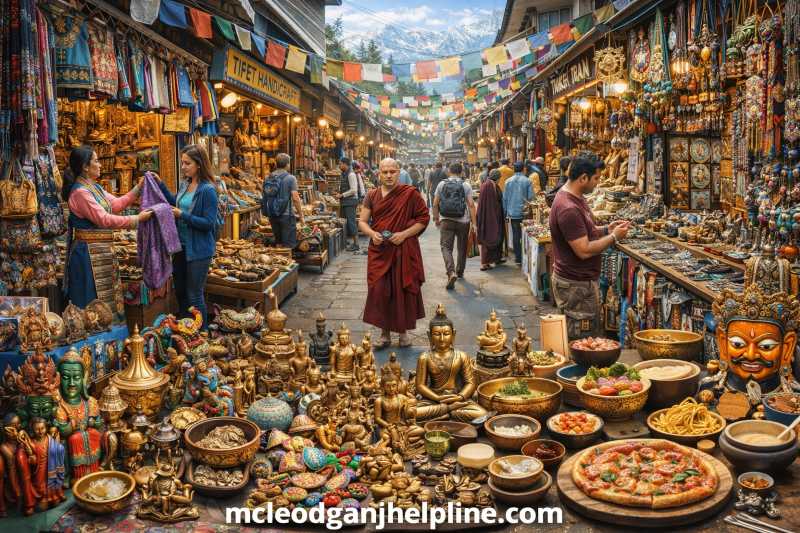
What is McLeodganj most famous for shopping?
McLeodganj is most famous for Tibetan handicrafts, prayer flags, singing bowls, woolen clothes, silver jewelry, and spiritual items sold by Tibetan refugee communities in small independent markets.
Are Tibetan markets in McLeodganj authentic?
Yes, most Tibetan markets in McLeodganj are authentic and run by Tibetan families. Many items are handmade locally or sourced through Tibetan cooperative workshops.
Is bargaining allowed in McLeodganj markets?
Bargaining is allowed but should be done politely. Prices are usually fair, and aggressive bargaining is discouraged as many vendors rely on small margins.
What are the best souvenirs to buy in McLeodganj?
Popular souvenirs include prayer flags, Tibetan incense, handcrafted jewelry, Buddha statues, woolen shawls, thangka paintings, and handmade notebooks.
Are markets open all year round?
Yes, markets operate year-round, but peak activity occurs between March to June and September to November when tourist footfall is highest.
Do shops accept digital payments?
Many shops accept UPI and mobile payments, but smaller stalls prefer cash. Carry small denominations for convenience.
Are items expensive in McLeodganj?
Prices are generally moderate. Handcrafted and spiritual items may cost more due to workmanship, but overall shopping is affordable compared to metro cities.
Can I buy trekking gear in McLeodganj markets?
Yes, basic trekking gear like jackets, walking sticks, gloves, and caps are widely available, though quality varies between shops.
Are Tibetan markets suitable for budget travelers?
Yes, budget travelers can find affordable clothing, souvenirs, and essentials while still supporting local sellers.
What should I avoid buying?
Avoid items made from endangered wildlife materials or antiques claimed to be centuries old, as these may be illegal or misrepresented.
Is shopping safe in McLeodganj?
Shopping is generally safe. Pickpocketing is rare, but visitors should stay attentive in crowded areas.
Are shops run by locals?
Most shops are operated by Tibetan refugees and local Himachali families who depend heavily on tourism.
Can I ship items back home?
Some shops assist with courier services, but fragile items should be packed carefully and insured if shipped.
What is the best time of day for shopping?
Late morning to early evening is ideal. Shops usually open by 10 AM and close by 8 PM.
Are spiritual items blessed?
Some shops near monasteries sell items that have been blessed, but it is best to ask the shopkeeper directly.
Is photography allowed in markets?
Photography is usually allowed, but always ask permission before photographing people or religious items.
Do markets close during winter?
Markets remain open in winter, though fewer stalls operate during heavy snowfall and off-season months.
Are eco-friendly products available?
Yes, many vendors sell handmade, reusable, and eco-friendly products such as cloth bags and natural incense.
Can I find books in Tibetan markets?
Yes, shops sell books on Buddhism, Tibetan culture, meditation, and spirituality in English and Tibetan.
Does shopping support the local community?
Yes, shopping in Tibetan markets directly supports refugee livelihoods and helps preserve Tibetan culture.