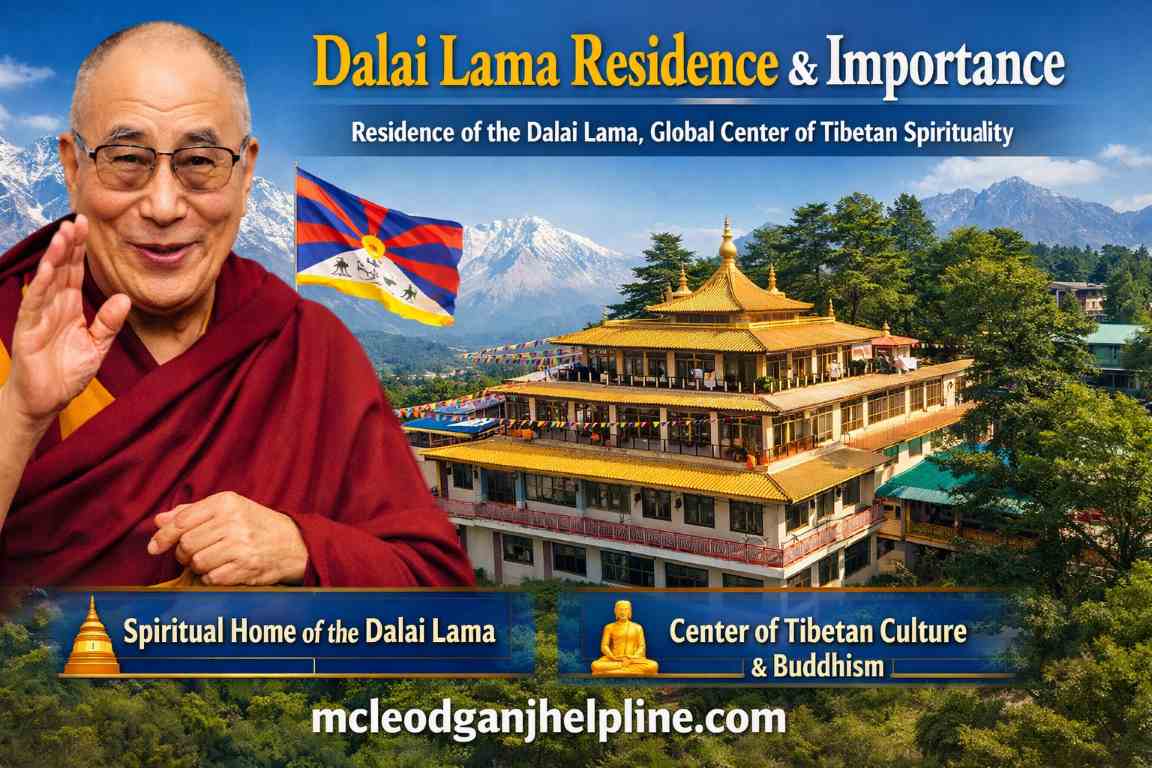
AI Overview:- Dalai Lama & McLeodganj
McLeodganj serves as the residence of the 14th Dalai Lama and the central hub of Tibetan Buddhism in exile. It combines spiritual teachings, monasteries, and cultural preservation, making it a globally significant destination for followers and mindful travelers.
FAQs
Why does the Dalai Lama live in McLeodganj?
The Dalai Lama began living in McLeodganj in 1960 after leaving Tibet. The quiet Himalayan environment, safety provided by India, and isolation suitable for meditation made McLeodganj an ideal place for spiritual leadership and community rebuilding.
Is McLeodganj the permanent residence of the Dalai Lama?
McLeodganj serves as the primary residence of the Dalai Lama, though he travels internationally for teachings and peace initiatives. His official home and main temple complex remain located in McLeodganj, making it a central spiritual base.
What is the Tsuglagkhang Complex?
The Tsuglagkhang Complex is the main temple area in McLeodganj. It includes the Dalai Lama’s temple, Namgyal Monastery, prayer halls, museums, and spaces where teachings, ceremonies, and daily prayers take place.
Can tourists visit the Dalai Lama temple?
Yes, visitors are allowed inside designated areas of the Dalai Lama temple. Tourists must follow strict etiquette such as maintaining silence, dressing modestly, and respecting prayer activities and security instructions at all times.
What is Namgyal Monastery known for?
Namgyal Monastery is the personal monastery of the Dalai Lama and the largest Tibetan monastery outside Tibet. It focuses on advanced Buddhist studies, rituals, and the preservation of Tibetan monastic traditions in exile.
Is McLeodganj important only for Buddhists?
No, McLeodganj attracts people from all backgrounds. Many visitors come for meditation, mindfulness learning, ethical teachings, and peaceful reflection, even if they do not follow Buddhism as a religion.
What type of Buddhism is practiced in McLeodganj?
McLeodganj mainly follows Tibetan Buddhism, particularly the Gelug school led by the Dalai Lama. Teachings emphasize compassion, wisdom, ethical living, and mental discipline through study and meditation.
Are the Dalai Lama’s teachings open to foreigners?
Yes, many teachings are open to international visitors. Some public teachings require advance registration, while others are freely accessible. Translation services are often provided to support global audiences.
How has the Dalai Lama influenced McLeodganj?
The Dalai Lama transformed McLeodganj into a global spiritual center. His presence encouraged the development of monasteries, schools, cultural institutions, and peaceful tourism focused on learning, ethics, and compassion.
Is photography allowed at the Dalai Lama temple?
Photography rules vary by area. Some sections allow photos, while others strictly prohibit them, especially during prayers. Visitors should follow signage and respect instructions from temple staff.
Can visitors attend Buddhist teachings in McLeodganj?
Yes, visitors can attend teachings conducted by monks and senior teachers. Larger teachings by the Dalai Lama require registration, while daily monastery sessions are often open to respectful observers.
What is the role of Buddhism in daily life in McLeodganj?
Buddhism shapes daily life through prayer routines, ethical behavior, festivals, and community values. Monks, prayer flags, chants, and rituals are part of everyday surroundings in McLeodganj.
Are meditation courses available for beginners?
Yes, many centers in McLeodganj offer beginner-friendly meditation courses. These programs focus on mindfulness, breathing techniques, and basic Buddhist philosophy without requiring religious commitment.
Does the Dalai Lama still give public teachings?
Yes, when his health and schedule allow, the Dalai Lama gives public teachings and talks. These events are announced in advance and attract followers from around the world.
Why is McLeodganj called Little Lhasa?
McLeodganj is called Little Lhasa because of its strong Tibetan population, monasteries, cultural institutions, and spiritual life that closely resemble traditional Tibetan society in exile.
Is McLeodganj suitable for spiritual retreats?
Yes, McLeodganj is ideal for spiritual retreats due to its calm environment, meditation centers, monasteries, and teachings focused on inner peace, ethical living, and mental clarity.
How should visitors behave at Buddhist sites?
Visitors should dress modestly, remove shoes where required, avoid loud conversations, and follow temple rules. Respectful behavior is essential to maintain the spiritual atmosphere of Buddhist sites.
What language are Buddhist teachings conducted in?
Teachings are primarily conducted in Tibetan, but English, Hindi, and other language translations are commonly available through live interpreters or audio systems for international visitors.
Does Buddhism influence local governance in McLeodganj?
While governance follows Indian law, Buddhist values strongly influence community behavior, conflict resolution, education, and social harmony among the Tibetan exile population in McLeodganj.
Why do people travel to McLeodganj for Buddhism?
People visit McLeodganj to learn directly from authentic Tibetan Buddhist institutions, experience living spirituality, attend teachings, and explore a peaceful environment shaped by compassion and mindfulness.
🔧 Other About McLeodganj Town & Culture
No other guide found